From Village Green to Shared Playing Field
Explore the shift from village green to shared playing field and learn how local records, facilities and access arrangements reveal a ground’s sporting history.
The village green at Cricket St Thomas in Somerset is closely associated with the history of cricket, while playing fields across Britain are often managed for scheduled sport. The shift from village green to shared playing field was not a single national change: it varied by place, shaped by local customs, land arrangements and the games people played.
Village greens and playing fields had different histories
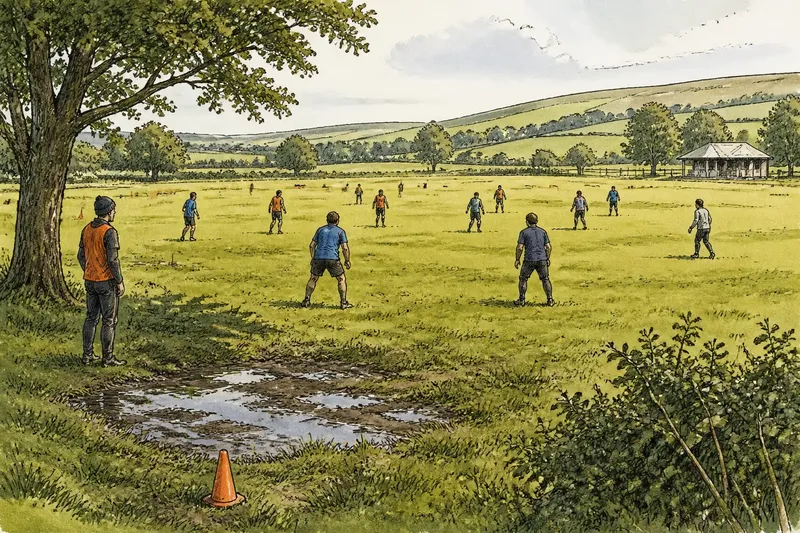
A village green was generally part of communal open space, used for a mixture of recreation, gatherings and, in some places, local games. A playing field is more directly associated with organised sport, though it may also host informal recreation and community events.
The distinction is useful, but it is not absolute. Some greens became well known for particular sports; some playing fields remain open beyond club fixtures. To understand a site, separate its name from its history: ask who used the land, what activities took place, and how access was arranged at different times.
Local records make the change easier to trace
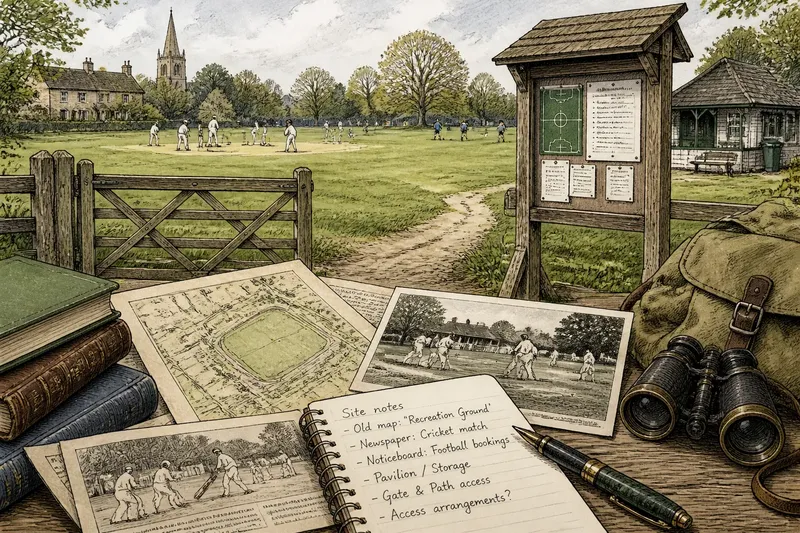
Broad claims about the development of sporting grounds can obscure local differences. Begin with records tied to the place rather than assuming every community followed the same pattern. Local history societies, county archives, parish records, old maps and newspapers can help identify when a site appears in the record and what people used it for.
Look for several kinds of evidence. A map may show a green or recreation ground, while a newspaper report may name a match or local event. Council minutes and deeds can clarify management or land arrangements, but their wording needs care: a reference to recreation does not by itself establish that a site was open to everyone or reserved for a particular sport.
Keep a simple note of each source’s date, wording and scope. Distinguish what it directly says from what you infer. If records conflict, describe the uncertainty rather than smoothing it into a neat story.
Sporting facilities reveal how a site was used
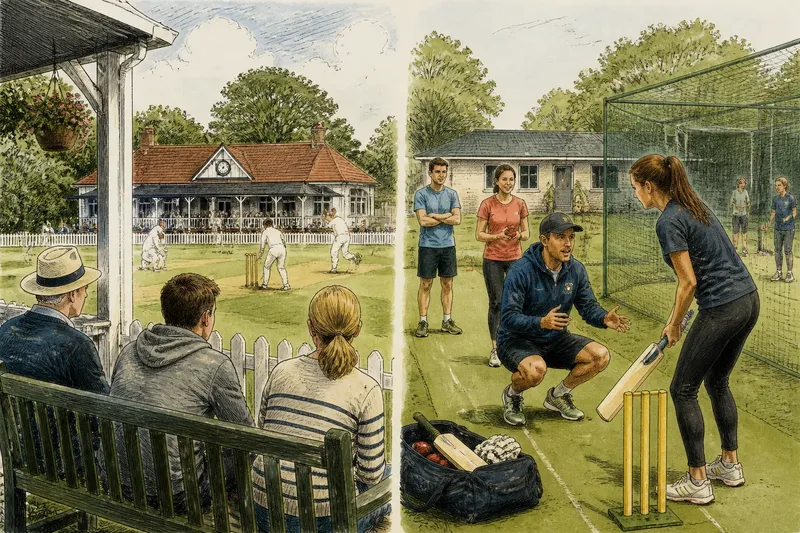
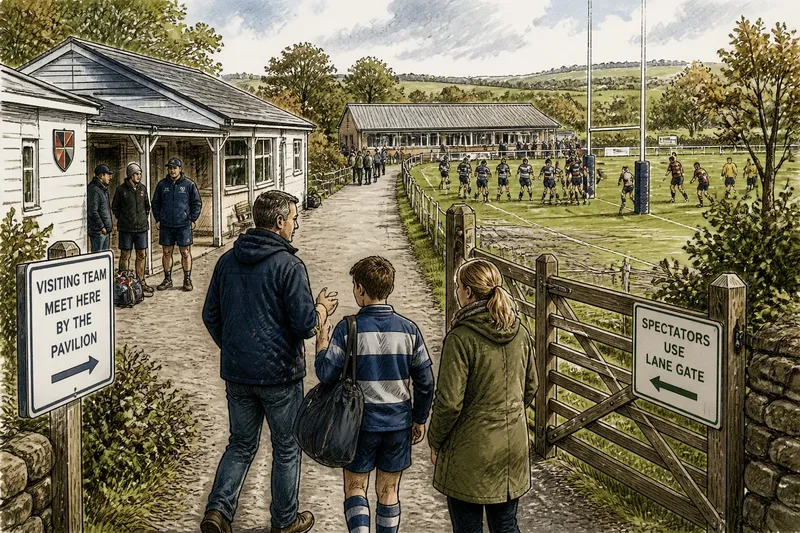
Instead of treating lines and boundaries as the main story, look at the facilities and routines that support local sport. A pavilion may provide changing space or storage; a noticeboard may identify a club or explain bookings; a gate can indicate how people enter. None of these details alone proves who had access, but together they offer questions to investigate through records and current site information.
Imagine a local history volunteer finds an old map labelled “recreation ground”, a later newspaper report naming a cricket match, and a present-day noticeboard listing football bookings. The volunteer can record that the site’s documented uses include recreation, cricket and scheduled football. They should not claim that one activity replaced another unless the sources support that sequence.
A noticeboard works like a bus timetable: it tells you about planned use, not everything people do at the site. Compare visible facilities with written records and ask the managing organisation when the evidence leaves a gap.
Access depended on local decisions
Calling a ground “shared” does not tell you whether residents could enter freely, whether a club booked particular times, or whether a school had priority. Those arrangements may have changed, so distinguish historical access from current rules.
- Check the site name on an old map; if it identifies a green or common, then investigate local records for its uses, otherwise search under the modern site name.
- Check parish or council minutes for management decisions; if they mention bookings or restrictions, then record the dates and wording, otherwise avoid claiming that access was formally controlled.
- Check newspaper reports for named games or events; if they locate activity at the site, then cite the event as evidence of use, otherwise treat a general report as context only.
- Check current signs for opening rules; if they state limits or booking requirements, then follow them, otherwise ask the site manager before assuming access.
- Check for a pavilion, storage area or marked entrance; if present, then note it as a facility clue, otherwise do not infer that organised sport never took place.
- Check whether a source describes a particular group; if it names a club, school or public event, then keep that distinction in your account, otherwise do not assume equal access for all users.
What should you look for when researching a playing field?
Does a “recreation ground” mean the land was public?
Not necessarily. The label describes a use or purpose in a record, but ownership and access need separate evidence from deeds, council documents or current management information.
Can present-day facilities date a field’s sporting history?
Facilities can suggest how a site is used now, but they do not establish when that use began. Look for dated maps, photographs, minutes or reports to support a historical claim.
How can I tell whether a green hosted organised sport?
Search local newspapers, club records, parish documents and archive catalogues for the site name and the sport. A specific report naming the location is stronger evidence than a general account of the sport in the area.
What if local sources disagree?
Record what each source says and when it was made. Explain the disagreement or leave the sequence unresolved rather than choosing the tidiest version without evidence.
Describe the ground without overstating its story
A useful account connects a named place to evidence: its recorded uses, facilities, management and access arrangements. Use the phrase “village green to shared playing field” as a way to frame local questions, not as a claim that every site passed through the same stages.
When you visit a field, note its name, signs, paths, facilities and apparent activities, then check those observations against local sources. That approach lets you describe what the ground shows today while keeping its sporting history anchored to evidence rather than assumption.