A First Visit to a Regional Games Day
Plan a first visit to a regional games day with a clear anchor event, practical venue checks and room to discover local sports without rushing.
A first visit to a regional games day is easier when you choose one anchor event and leave room to respond to the venue. A simple route between sports helps you enjoy the local programme without trying to catch every start.
These gatherings may bring different sports, age groups and local customs onto one site. Treat the schedule as a guide, then use signs, paths and steward advice to decide what to watch next. The venue is more like a railway junction than a timetable: it gives you routes, but you choose where to go.
Choose an anchor event before you arrive
Pick one match or activity you particularly want to see, and use it as the day’s fixed point. Check the current programme for its location and start time, then leave the surrounding parts of your day flexible. This gives you a reason to settle in without making every other decision in advance.
If you are new to the sport, watch how players position themselves, how possession or turns change, and what prompts a reaction from the crowd. You do not need to learn every rule before you can follow the shape of a contest.
Use the venue layout to choose your next stop
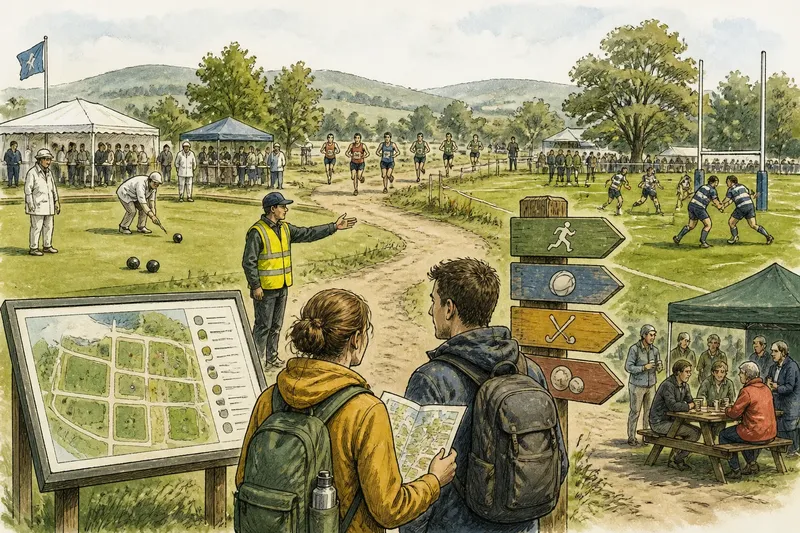
At a multi-sport event, pitches, courts and open areas may sit apart, with club tents and refreshment stalls marking natural pauses. Look at the venue map or information board before setting off. A nearby game may be a better choice than one that looks prominent on the programme if reaching it means crossing the whole site.
Follow signs and ask an event steward where spectators may stand or which paths are open. Different sports can have different viewing customs: one crowd might gather by a boundary, while another watches from a bank. Take your cue from signs and regular spectators, and do not cross a playing area to get a better view.
Check the practical details that shape the visit
Check the programme for your anchor event; if its time or location is unclear, ask a steward before choosing your route.
Check the venue map for the entrance and the distance between areas; if the route looks awkward, choose a nearer event or build in a pause.
Check where spectators may stand; if a boundary is marked or access is restricted, watch from the signed viewing area instead.
Check the forecast and the ground conditions; if rain or soft ground is expected, bring a coat and footwear suited to grass or gravel.
Check where you can sit, eat or take a quiet break; if the central area is crowded, use another marked rest point.
Check the programme board for changes; if an event is delayed or moved, ask a steward and choose a nearby game or a break.
Check that everyone in your group knows a meeting point; if people split up, return there at the agreed time rather than searching across the site.
Keep a loose route instead of a packed timetable
Choose the anchor event, note one nearby option and leave the rest of the schedule open. Keep the programme accessible so you can check what is happening as the day unfolds. If a match becomes absorbing, stay; if you are ready to move, wait for a natural pause and follow a signed route to the next area.
Say you arrive with a friend who follows bowls while you are curious about a local running event. You check the board and see that the running event is on a nearby course after the opening part of the bowls match. You agree to watch the bowls first, follow the signed path to the course, and use the event board to confirm the running schedule. The result is a shared starting point and a clear alternative if the timing changes: stay for bowls or take a break rather than rushing across the venue.
What should you do when the day changes?
How long should I watch an unfamiliar game?
Stay until you can recognise a few recurring patterns, then decide whether you want to see more. If your curiosity fades, move on at a natural pause; if it grows, give the match more time.
Can I attend without knowing the rules?
Yes. Start by observing how play begins, where spectators stand and what draws a reaction from the crowd. If you want an explanation, ask a steward or supporter during a pause.
What if an event is delayed or moved?
Check the venue board or ask a steward for the latest information. Then choose a nearby event or take a break, rather than crossing the site based on an old schedule.
How can a group with different interests share the visit?
Agree on an anchor event and a meeting point, then split up for a while if the venue allows it. Set a time to meet again so each person can follow an interest without losing touch with the group.
Notice what makes each part of the venue distinct
The local character of a games day can show in how clubs use their grounds, where supporters gather and how one sport gives way to another across the site. Take a moment to notice those differences, but let signs and safe viewing areas determine where you walk and stand.
For a first visit to a regional games day, keep the anchor event and venue map easy to reach, then let nearby options shape the rest. That small preparation makes it easier to follow one contest, discover another and leave without feeling you had to see everything.